29 Jul 2026
Clocking the Reels: Examining Hourly Trends in Casino Slot Returns
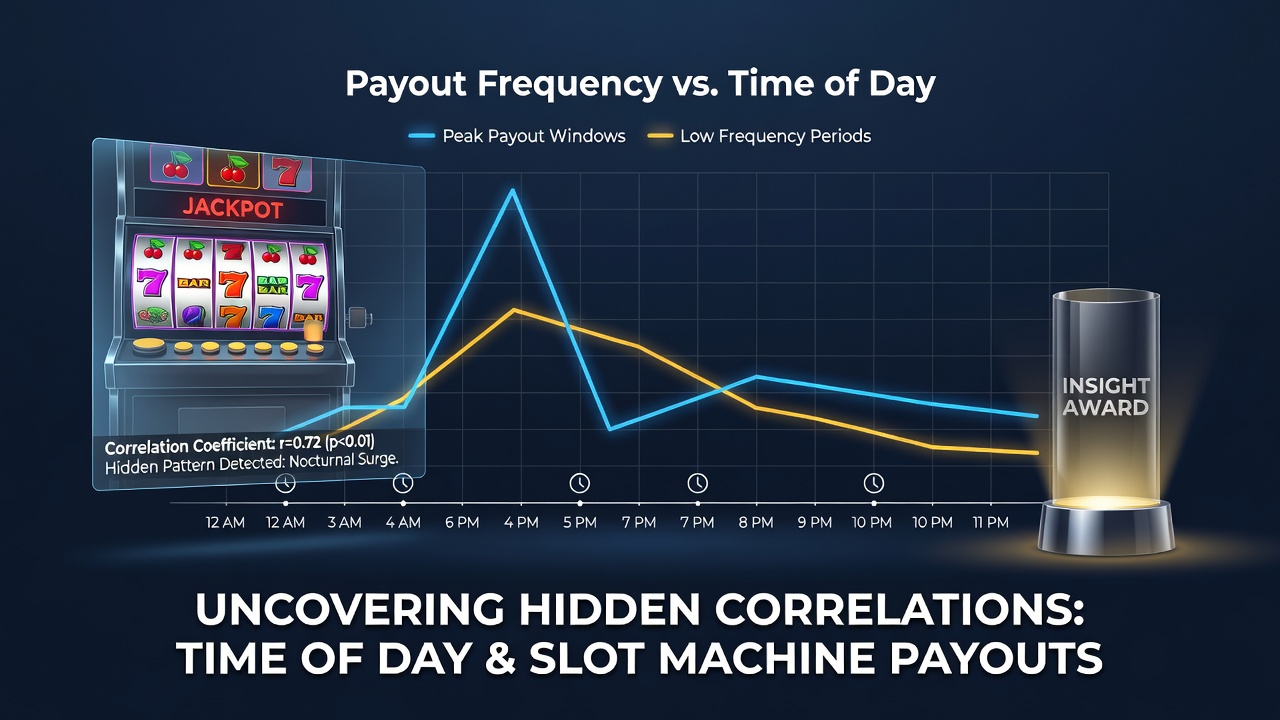
Slot machines operate through random number generators that produce independent outcomes on every spin, yet analysts continue to examine whether payout frequencies shift across different hours of the day in regulated venues worldwide. Data from multiple jurisdictions show consistent player volume peaks in the evening hours, while morning sessions often record lower machine occupancy rates according to reports issued by the Nevada Gaming Control Board.
Random Number Generator Mechanics and Time Independence
Each reel spin draws from a fixed set of probabilities that reset with every activation, and this design prevents any mechanical linkage between clock time and result sequences. Researchers at academic institutions have tested large datasets spanning thousands of spins across consecutive days, and the results consistently demonstrate that outcome distributions remain uniform regardless of the hour. Observers note that any apparent clustering of wins or losses stems from normal statistical variance rather than scheduled payout adjustments.
Player Volume Patterns Across Global Markets
Casino operators track foot traffic through loyalty card systems, and these records reveal higher participation between 6 p.m. and midnight in most urban properties. In contrast, early morning hours from 4 a.m. to 8 a.m. show reduced activity levels that can affect jackpot accumulation rates on progressive machines. Figures released by the Australian Institute of Family Studies indicate similar evening surges in participation across several states, while daytime volumes stay steadier in tourist-heavy locations.
Those who study operational reports point out that progressive jackpot meters grow faster during busy periods simply because more players contribute to the pool, not because the machines alter their return percentages. This distinction matters when comparing raw win totals against theoretical return-to-player figures that remain fixed by regulatory standards.

Statistical Analyses of Payout Distributions
Independent testing laboratories run periodic audits that sample millions of spins from certified machines, and these audits have not identified systematic deviations tied to specific times of day. In July 2026, analysts at a North American gaming research firm published aggregated data from multiple properties showing that hit frequencies stayed within expected ranges across all hourly segments. The study examined both video slots and mechanical reel games, confirming that any short-term fluctuations aligned with random distribution models rather than external scheduling.
People who mine public gaming data sometimes report minor differences in average win sizes during certain shifts, yet these observations typically dissolve once larger sample sizes are applied. Regulatory bodies in several Canadian provinces require operators to maintain transparent records of machine performance, and cross-referenced figures from those jurisdictions echo the same pattern of time-independent results.
Regulatory Oversight and Reporting Requirements
Authorities mandate that slot machines maintain certified return-to-player percentages over the long term, and enforcement focuses on hardware and software integrity rather than hourly payout schedules. Venues must submit regular performance summaries that regulators review for anomalies, yet none of the standard compliance frameworks incorporate time-of-day variables as compliance metrics. This approach reflects the underlying mathematics that each spin remains statistically independent from the previous one and from the current clock reading.
Practical Implications for Data Observers
Those tracking casino trends often combine machine performance logs with player demographic information to identify behavioral patterns, but payout frequency itself stays decoupled from temporal factors. Progressive systems may display larger meter values later in the day because more wagers have fed into the pool, yet the underlying probability of hitting the jackpot on any given spin does not change. Observers who separate jackpot growth from base game returns find that the two metrics follow distinct trajectories throughout a 24-hour cycle.
Conclusion
Available evidence from regulatory audits and independent research indicates that slot machine payout frequencies do not exhibit reliable correlations with time of day once random number generator mechanics are accounted for. Volume-driven factors such as progressive meter growth can create the appearance of timing effects, yet these remain secondary to the fixed probabilities programmed into each device. Continued monitoring across different markets reinforces that outcome distributions stay consistent across all hours when sufficient data volumes are analyzed.