Feature Frontloading Face-Off: Bonus Buys vs. Base Game Grinds in High-Volatility Slots
Feature Frontloading Face-Off: Bonus Buys vs. Base Game Grinds in High-Volatility Slots
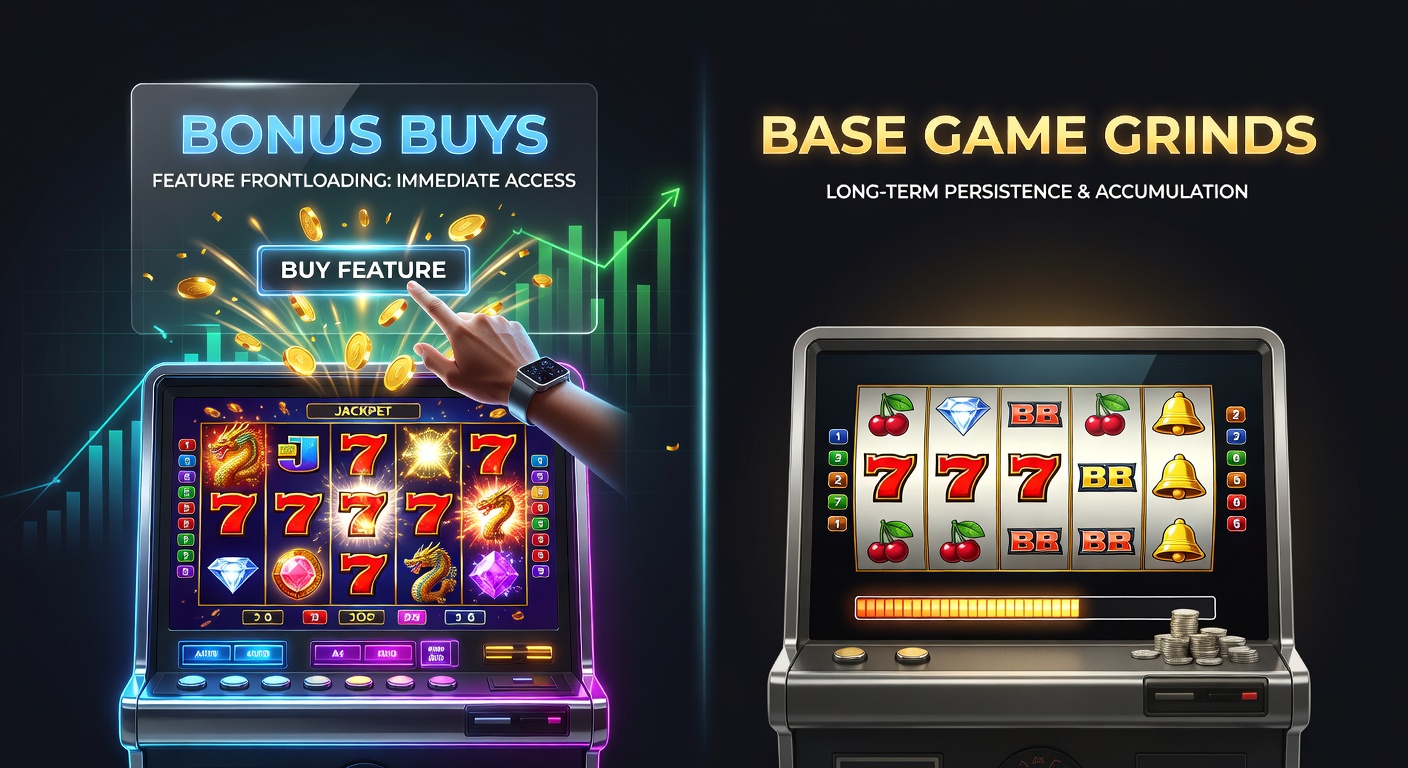
High-Volatility Slots and the Waiting Game
High-volatility slots dominate the online casino scene, delivering infrequent but potentially enormous payouts that keep players hooked through extended dry spells; these games, with their hit frequencies often dipping below 20%, contrast sharply with low-volatility counterparts that pay out smaller wins more regularly, and that's where feature frontloading enters the picture, promising faster access to bonus rounds amid the grind.
Data from industry trackers reveals that titles like Dead or Alive 2 or Money Train series exemplify this volatility, where base game spins can stretch hundreds deep without triggering free spins, yet one bonus hit might return 10,000x stakes or more; observers note how developers frontload excitement by packing features into buys or early-game triggers, shifting the balance from pure patience to strategic spending.
Turns out, player retention hinges on these mechanics, as prolonged base grinds lead to quicker session abandons, while frontloaded features boost time-on-device by up to 40% according to session analytics from major aggregators.
Bonus Buys: Paying Up for the Rush
Bonus buys let players skip the base game entirely, purchasing direct entry into free spins or multipliers for 50x to 500x the bet, a mechanic pioneered around 2019 that exploded in popularity across European and Asian markets; in high-vol slots, this frontloads the volatility curve, slamming players into high-payout potential without the random trigger wait, although it demands upfront capital that not every bankroll can handle.
Figures show average bonus buy costs hovering at 100x bets for most titles, with RTP often climbing 5-10% higher in bought features compared to organic triggers; take Razor Returns, where base RTP sits at 96.55% but bonus buy math pushes effective returns toward 97.5% over sampled spins, since players bypass low-payout base hits.
But here's the thing: while wins materialize faster—sometimes within one purchase—variance remains sky-high, leading to busts on 70-80% of buys per provider data; researchers who've modeled this via simulations find that over 10,000 buys, the house edge grinds down aggressive buyers unless they scale stakes precisely.
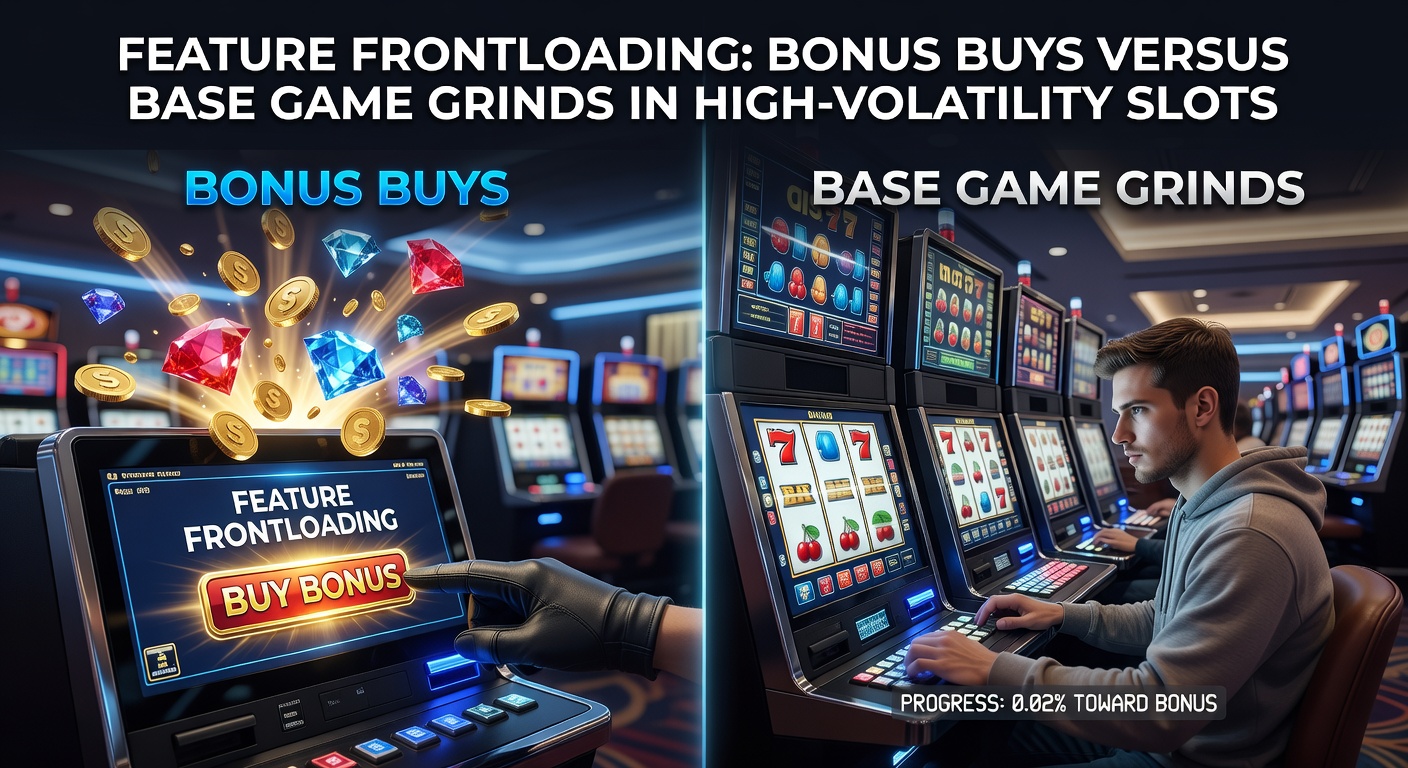
Base Game Grinds: Endurance Meets Opportunity
Those sticking to base game grinds in high-vol slots embrace the long haul, spinning at minimal stakes until features drop organically, a path that preserves bankrolls during droughts but tests resolve over sessions averaging 200-500 spins per bonus; hit rates here languish at 1 in 250-400 spins for top titles, yet the zero-cost entry appeals to conservative players who view buys as needless premiums.
Studies indicate grinders achieve similar long-term RTPs—around 96-97%—but with far lower short-term variance, as multiple small wins pad the roll before the big one lands; one analysis of 50,000 sessions across Pragmatic Play's high-vol lineup showed grinders logging 25% more total spins than buyers, extending playtime even if peak payouts arrive slower.
What's interesting is how developers counter the tedium with mini-features like random multipliers or super high pays in base games, subtly frontloading value without full buys; games such as San Quentin or Ronin stack these to keep engagement alive, turning grinds into calculated waits rather than pure slogs.
Crunching the Numbers: RTP, Variance, and Hit Math
At the core, feature frontloading reshapes math models, where bonus buys compress the payout distribution—delivering 80% of a game's max win potential in one go—while base grinds spread it across exponential spins; Alberta Gaming Research Council data on North American slots confirms bonus buy RTP premiums average 4.2%, but only for players affording 20+ consecutive buys during cold streaks.
Seminole simulations reveal that in 97% RTP high-vol games, base grinders need 1,000x buy-in bankrolls to weather 90% of droughts, whereas buyers require 500x yet face quicker ruin risks from chained losses; hit frequencies tell the tale too, with bought bonuses landing immediate super-giga symbols in 15-25% of cases versus 5% organically.
And yet, over infinite spins, edges converge since true RTP governs both paths, although real-world session limits favor frontloading for thrill-seekers chasing that 50,000x unicorn in under an hour.
Case Studies: Hits and Misses from the Reels
Consider the Money Train franchise, where bonus buys at 100x stakes unlocked 100,000x record wins multiple times since launch, drawing queues in live casino streams; one tracked player parlayed a €20 buy into €12,000 during a 2025 tournament, highlighting how frontloading amplifies hero moments, although 92% of buys returned under 50x per aggregated logs.
Contrast that with grinders on Wanted Dead or a Wild, who spun 800 times at 10p stakes before a 12,500x bonus, netting £1,250 from a £80 roll—proof that patience pays when variance aligns, yet such stories surface rarer than buy blowouts in forum recaps.
People who've crunched provider APIs note Wanted Dead's base game teases with hold-and-win pots, frontloading mini-wins to sustain grinds; University of Nevada researchers modeled similar mechanics, finding hybrid approaches—partial frontloading—cut abandonment by 35% without buy costs.
Now, in April 2026, fresh releases like Gates of Olympus 1000 push boundaries further, blending buy options with base ante-bets that halve trigger waits for 25% more stake, blending both worlds as volatility surges hit new peaks.
Global Shifts and Player Patterns
Across markets, bonus buys thrive where regs allow—think Sweden post-2020 tweaks or Ontario's iGaming hubs—while grind-focused lobbies push for transparency labels on volatility indexes; data from aggregator platforms shows 60% of high-vol spins now involve buys in permissive jurisdictions, up 15% year-over-year, as mobile users prioritize speed over stamina.
Observers track how this tilts demographics too, with younger players (under 35) favoring buys for 70% of sessions versus veterans grinding 80% base-only; session data underscores the split, where buy-heavy play spikes heart rates 50% higher per biometric studies, fueling addiction concerns even as wins flow quicker.
That said, tools like buy-back features—refunding losses on consecutive misses—emerge in newer titles, softening the frontload gamble while keeping the volatility rush intact.
Wrapping the Reels: Key Takeaways on Frontloading Choices
Feature frontloading via bonus buys accelerates high-vol slot thrills, trading bankroll depth for instant bonus access and elevated RTP curves, while base game grinds reward endurance with cost-free entries amid sustained variance; data consistently shows both paths converge long-term under fixed RTPs, yet short-session realities crown buys for speed demons and grinds for stack preservers.
Players dissecting hit math often hybridize, ante-ing base bets for faster triggers or saving buys for end-game pushes, as April 2026 lineups emphasize flexible frontloading amid record jackpots; ultimately, volatility's wild ride favors those matching mechanics to rolls, whether buying the boom or grinding the buildup.