Injury timeline cross-checks: gauging recovery impacts on soccer player performance markets
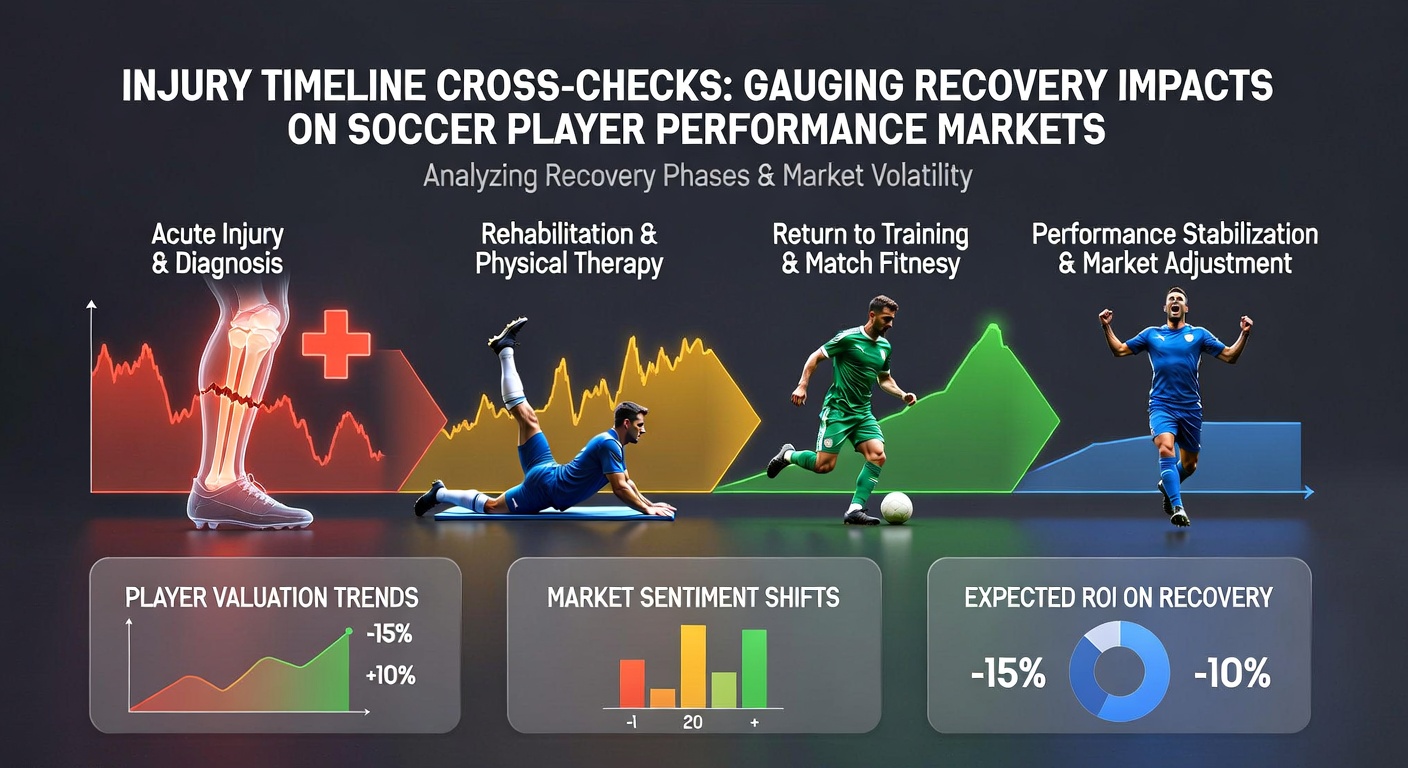
Analysts track injury timelines against historical recovery data to adjust expectations in soccer player performance markets, where outcomes hinge on precise return-to-play projections and subsequent output levels. Leagues release weekly medical updates that feed directly into these evaluations, allowing cross-checks between announced absence periods and statistical benchmarks from prior seasons. In May 2026, the final weeks of the European campaign have seen multiple clubs publish detailed recovery schedules that shift market pricing on individual contributions in remaining fixtures.
Core components of timeline verification
Performance markets rely on layered verification that combines club statements with independent medical indicators such as MRI timelines and physiological testing results. Observers note that clubs in the Bundesliga publish standardized return windows based on tissue healing phases while those in MLS incorporate GPS workload metrics to refine projections. These sources create reference points that market participants compare against databases of similar injuries across age groups and positions. Researchers have compiled multi-year datasets showing that hamstring strains in midfielders typically require 18 to 28 days before full training resumes, with performance metrics returning to baseline after an additional two to three matches.
Integration with performance indicators
Cross-checks extend beyond absence duration to post-recovery output, including sprint volume, pass completion rates, and expected goal contributions. Data from the 2025-26 season indicates that forwards returning from ankle injuries register a 12 percent drop in shots on target during their first three appearances before stabilizing. Teams that publish granular load management plans allow more accurate modeling of these dips, which in turn influences pricing in markets that settle on specific statistical thresholds. One study published by the University of Queensland examined 142 professional soccer cases and found that players cleared after 25 days or fewer maintained pre-injury workload levels at higher rates than those absent for longer periods.
Regional variations in reporting standards
Reporting practices differ across confederations and affect the reliability of cross-checks. UEFA clubs tend to issue conservative estimates that extend timelines by several days compared with initial assessments, whereas South American federations often provide shorter windows that require frequent revisions. Australian A-League medical staff incorporate climate-specific recovery factors such as heat acclimatization periods, adding another variable for markets covering matches in subtropical venues. These differences create opportunities for comparative analysis when a player moves between leagues mid-season, as historical benchmarks must be adjusted for new environmental and tactical contexts.
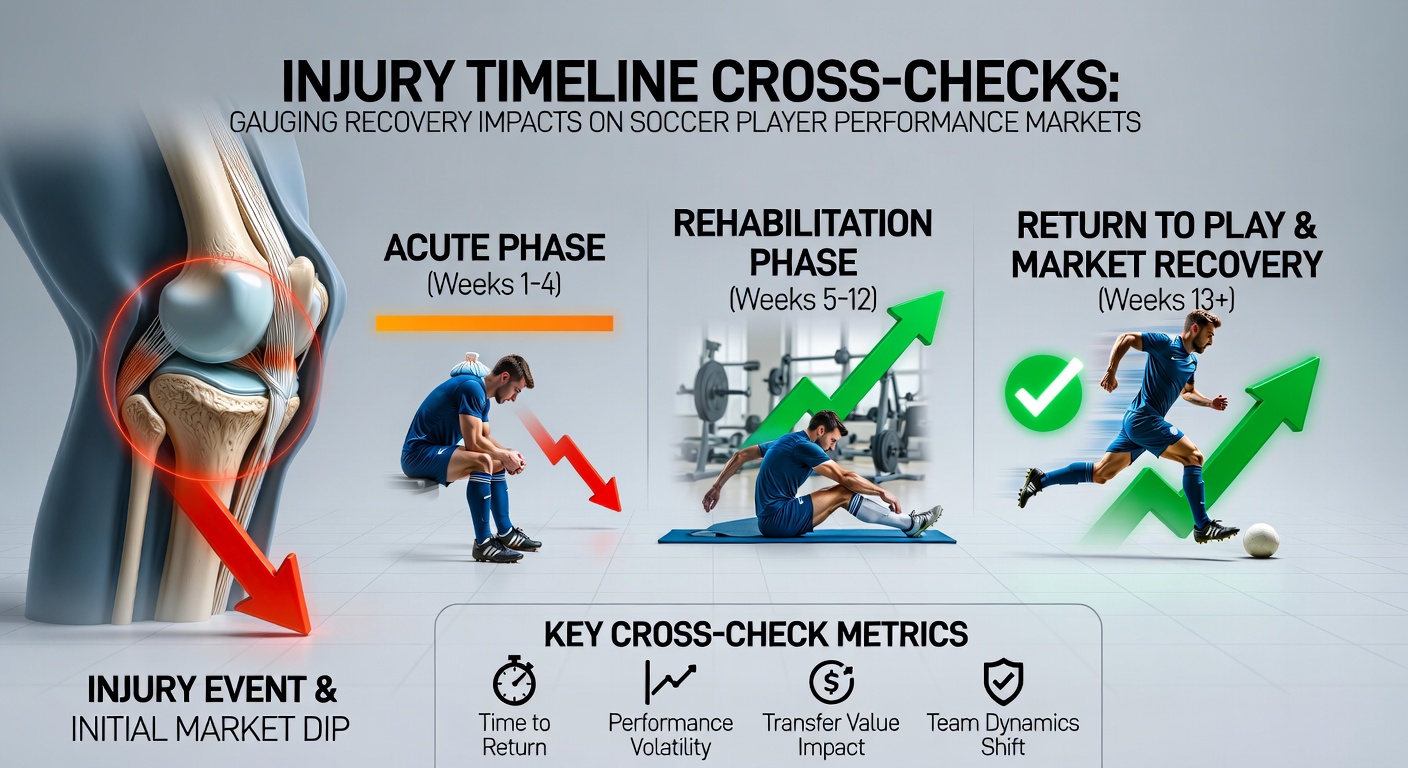
Data sources and verification methods
Market participants cross-reference club communiqués with independent tracking systems that log training participation and match minutes. Figures from Opta and similar providers reveal patterns such as reduced high-intensity runs in the second match after return, regardless of injury type. Academic papers archived by the National Institutes of Health supply longitudinal studies that quantify regression risks when players exceed 80 percent of prior workload too quickly. FIFA's medical division also releases periodic reports on injury surveillance across member associations, offering standardized categories that facilitate consistent timeline comparisons.
Verification becomes more complex during congested schedules, where overlapping international breaks and domestic cups compress recovery windows. In such periods, analysts examine minutes played in the preceding 60 days alongside announced injury grades to estimate residual fatigue effects. Evidence suggests that defenders returning from adductor issues show measurable declines in duel success rates for up to four matches when fixture density exceeds one game every five days.
Practical applications in market evaluation
Cross-check protocols inform adjustments to expected performance ranges rather than binary availability decisions. A winger listed as doubtful for 10 days may still generate value in markets focused on assists if historical data shows elevated creativity upon return from similar absences. Teams that release detailed rehabilitation milestones allow finer calibration of these ranges, reducing uncertainty in statistical projections. Observers have documented cases where early clearance announcements coincided with subsequent dips in key metrics, prompting refinements to models that weight recent training data more heavily than initial timelines.
Long-term pattern recognition
Multi-season datasets enable identification of players whose recoveries consistently outperform or underperform averages. Such patterns emerge when injury histories are matched against advanced metrics like progressive passes or pressures applied per 90 minutes. Leagues that mandate centralized medical reporting, such as those following German Football Association guidelines, produce cleaner datasets for these comparisons. The resulting profiles help differentiate between temporary post-injury adaptation and structural changes in a player's output profile.
Conclusion
Injury timeline cross-checks combine club disclosures, independent tracking data, and peer-reviewed recovery studies to refine projections within soccer player performance markets. Regional reporting differences and fixture congestion introduce additional variables that require ongoing adjustment. As the 2025-26 campaign concludes, these verification methods continue to shape how markets translate medical updates into performance expectations across multiple competitions.