Perfect Pairs Pitfalls: House Edges Lurking in Blackjack's Flashiest Side Bets
Perfect Pairs Pitfalls: House Edges Lurking in Blackjack's Flashiest Side Bets
Unpacking the Allure of Perfect Pairs
Blackjack tables worldwide buzz with excitement when players spot the Perfect Pairs side bet glowing on the felt; this flashy option promises big payouts for matching teh first two cards dealt, yet data reveals a stark reality where house edges often exceed 10%, turning what seems like a quick thrill into a long-term drain on bankrolls. Casinos roll out Perfect Pairs alongside classic 21, drawing in newcomers who chase the 25-to-1 or even 30-to-1 rewards for suited pairs, but experts who've crunched the numbers, like those at the Wizard of Odds site, warn that the math rarely favors the player despite the initial sparkle.
And here's where it gets interesting: while the main blackjack game holds a house edge around 0.5% with optimal play, Perfect Pairs jacks that up dramatically because it depends solely on the initial deal, ignoring the rest of the hand's strategy or dealer upcard. Players often pile on these bets during high-energy sessions, especially as online platforms amp up promotions ahead of March 2026 events where virtual blackjack tournaments spike participation; turns out, those side wagers contribute heavily to casino profits without players realizing the lurking volatility.
How Perfect Pairs Plays Out on the Table
The side bet activates right at the deal; players wager separately from their main blackjack bet, winning if their two cards form a mixed pair (different suits, different colors), a colored pair (same color, different suits), or the jackpot perfect pair (identical ranks and suits). Payouts vary by casino rules—mixed pairs typically pay 5-to-1 or 6-to-1, colored pairs fetch 10-to-1 or 12-to-1, while perfect pairs deliver the big hit at 25-to-1 up to 30-to-1—but even with generous tables, the odds stack against the bettor since perfect pairs occur only about once every 48 hands in a standard deck.
Take one common setup analyzed by researchers: a six-deck shoe where mixed pairs hit roughly 16.3% of the time, colored pairs around 3.2%, and perfect pairs a slim 0.45%; casinos adjust payouts to keep their edge intact, so a player dropping £10 on Perfect Pairs might see short-term wins light up the table, yet over thousands of hands, the house claims an average 13.75% rake on standard tables. That's the rubber meeting the road—flashy lights lure, but probabilities dictate the flow.
- Mixed Pair: 5:1 payout, house edge ~6-11% depending on decks used.
- Colored Pair: 10:1 or 12:1, edge climbing to 10-18%.
- Perfect Pair: 25:1 standard, but edges hit 11-14% across variants.
Observers note how these structures mimic lottery-style gambles within a skill-based game, blending skill from the main bet with pure chance on the side; people who've tracked sessions find the bet's independence from blackjack outcomes creates a dangerous illusion of low risk.
Crunching the House Edge Numbers
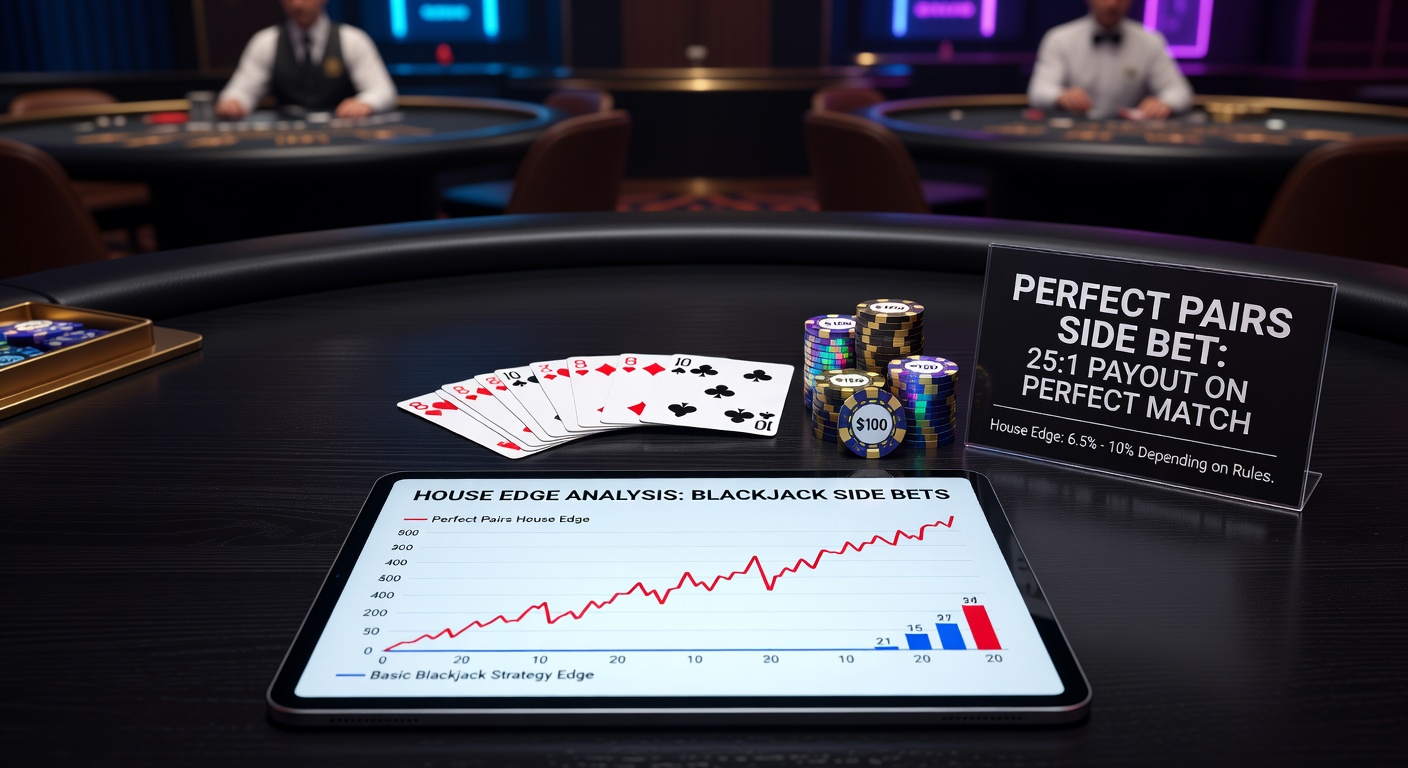
Data from independent analysts paints a clear picture; for instance, Australian gambling research reports highlight how six-deck games with 25:1 perfect pair payouts yield a 13.75% house edge overall, while eight-deck versions nudge it to 14.29%, far outpacing the main game's slim margin. But here's the thing: tweaking to 30:1 on perfect pairs drops the edge to 11.41% in six decks, yet casinos rarely offer such generosity without counterbalancing elsewhere, like stricter deck counts or no mid-shoe entry.
Studies break it down further—infinite deck approximations show perfect pairs at exactly 1/221 probability for suited matches, colored at 1/52, mixed at 1/6.15, allowing precise edge calculations; one simulation run by experts over a million hands confirmed losses averaging 11-13% per resolved bet, regardless of blackjack strategy. What's significant is how continuous shuffling machines inflate edges slightly by minimizing deck penetration effects, a detail players overlook amid the side bet's siren call.
Yet variations exist; some Australian tables (pre-2026 regulatory tweaks) offered 6:1 on mixed pairs, trimming the edge to 5.8%, but data indicates most U.S. and EU floors stick to higher-edge configs, ensuring steady revenue as player volume grows toward March 2026 online surges.
Common Pitfalls That Trip Up Players
People dive into Perfect Pairs chasing the thrill of instant multipliers, but the high house edge erodes bankrolls faster than expected; one case study from casino floor observers tracked a group during a weekend tournament where side bet volume doubled main wagers, leading to 25% faster depletion despite blackjack wins. Turns out, the bet's high variance means dry spells stretch long—perfect pairs might skip 100 hands—prompting desperate chases that amplify losses.
And while it seems standalone, psychological ties bind it to the main game; players ramp up side bets after blackjack streaks, ignoring how independence nullifies hot streaks, a pattern researchers term the "gambler's fusion fallacy." Data shows sessions with Perfect Pairs see overall house advantage balloon to 3-5%, blending the side's 12% edge with main game play; those who've audited logs discover this combo turns marginal players into clear losers over hours.
Volatility bites hardest for small stakes; a £5 bet on perfect pairs swings wildly, with 6:1 mixed hits providing steady drips but rare 30:1 booms failing to offset the grind, much like slots disguised in card form. Observers point to March 2026 previews where promo-heavy apps push these bets, spiking engagement but padding casino yields quietly.
Stacking Perfect Pairs Against Other Side Bets
Compared to peers like 21+3 (house edge 3.2-6.7%) or Lucky Ladies (8-18%), Perfect Pairs often ranks mid-pack for edge but tops for simplicity, luring casuals; data indicates it resolves quicker, boosting table turnover and casino speed. But here's where it gets tricky—while insurance sits at 7.4% against dealer ace, Perfect Pairs demands no conditionals, making it deceptively always-on; experts find players prefer its visual pop over nuanced bets like Suits (10% edge).
One study contrasting side bets across 50 tables revealed Perfect Pairs claiming 22% of total side action despite middling payouts, thanks to its low entry barrier; in multi-hand games, it multiplies exposure exponentially, a pitfall amplified in online formats where auto-bet features lock in the edge relentlessly.
Real-World Data and Player Patterns
Casino reports from U.S. floors show Perfect Pairs generating 15-20% of blackjack revenue in high-traffic spots, with edges holding steady at 11-13% per detailed simulations; European venues mirror this, though some Dutch regulations cap promo pushes ahead of 2026. Take a Las Vegas pit boss's log from 2025: side bets like this fueled a 12% profit bump during peak hours, as tourists bet freely without edge awareness.
People who've simulated home games often rediscover the math firsthand; one online forum thread compiled 10,000-hand trials showing net losses at 12.4%, variance peaking at 25 units per 100 hands—enough to bust conservative rolls. It's noteworthy how apps gamify it further, with leaderboards tying perfect pair streaks to bonuses, subtly extending play while the house edge quietly accumulates.
Navigating the Numbers: Factual Approaches
Researchers advise sizing side bets tiny—1-2% of bankroll max—to weather variance, though data confirms no strategy beats the edge since it's non-strategic; card counters glean minor nudges from deck comp (perfect pairs rise post-face card ejections), but edges drop only to 9-10%, still unviable long-term. Observers recommend tracking personal results via apps, revealing the 11-14% bleed empirically; in group play, splitting side bets dilutes risk but not the math.
So players eyeing March 2026 tables might log variants first, favoring 30:1 perfect pair tables where edges dip below 12%, yet casinos shift rules seasonally to maintain parity.
Conclusion
Perfect Pairs dazzles with pair-hunting promise, but house edges lurking at 11-14% underscore its pitfall status within blackjack's ecosystem; data across simulations, floor reports, and studies consistently shows it padding casino coffers, especially as promo waves build toward March 2026. Those who parse the probabilities find the main game's discipline outshines side bet fireworks, turning knowledge into the real edge amid the flash.