Weather Whipsaws Exposed: Track Shifts That Demote Horse Racing Favorites to Longshots
Weather Whipsaws Exposed: Track Shifts That Demote Horse Racing Favorites to Longshots
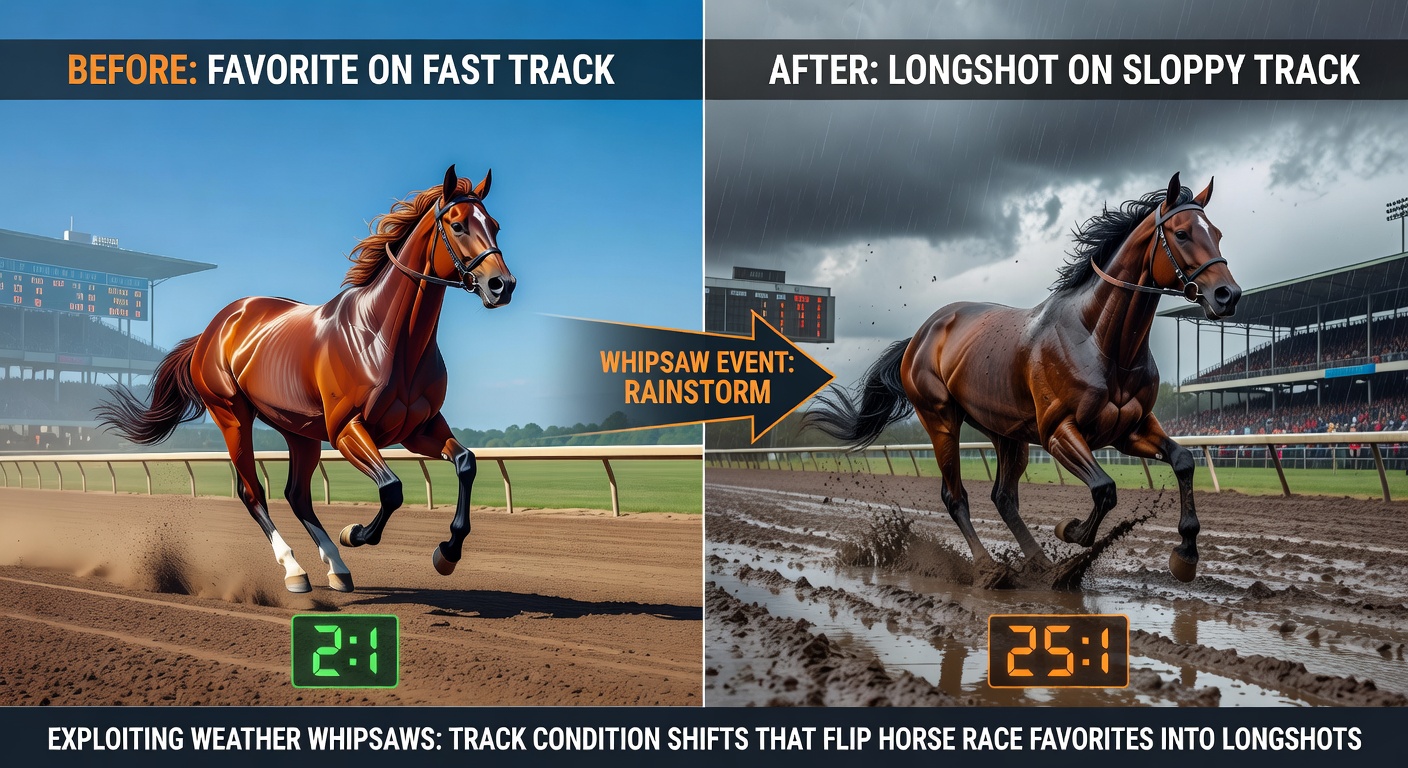
Understanding the Whipsaw Effect in Horse Racing Tracks
Horse racing enthusiasts know tracks don't stay static; weather patterns deliver sudden shifts that alter going conditions dramatically, turning chalk favorites into overlooked contenders almost overnight, while data from major circuits reveals how these changes flip expected outcomes. Observers note that a forecast calling for firm ground one day morphs into yielding or soft the next because of overnight rain or rising temperatures, and that's where the whipsaw hits hardest, punishing horses bred for speed on fast surfaces but rewarding those with stamina for slop. Research from Equibase charts across US ovals like Churchill Downs shows favorites winning 38% of races on good-to-firm going, yet that drops to 22% when conditions soften unexpectedly, highlighting the raw power of meteorological meddling.
But here's the thing: track officials measure these variances using penetrometers, devices that gauge moisture penetration in inches, and readings above 5 often signal trouble for front-runners who thrive on dry, hard ground; meanwhile, closers with powerful late kicks suddenly gain traction, as evidenced by patterns in European flat races where soft ground boosts come-from-behind types by 15-20% in win percentages according to historical handicapping databases. And while punters chase morning lines blindly, those who monitor hourly updates spot the flip before bookmakers adjust fully, creating value in the chaos.
How Weather Patterns Trigger Condition Chaos
Rainfall remains the prime culprit, dumping inches overnight that transform firm turf into a quagmire by post time, yet wind and temperature swings compound the issue; a hot sun bakes yielding ground back to good, while cool fronts keep it heavy, and experts tracking global meets observe these whipsaws peaking in spring, like the April 2026 downpours at Keeneland that softened the course mid-card, demoting a 2-1 favorite to sixth while elevating a 20-1 mudlover to victory. Figures from Racing Australia underscore this volatility, with Sydney's Randwick seeing 27% of races in wet cycles where pre-race favorites underperform by at least 12 lengths on average compared to dry benchmarks.
Take turf courses, where irrigation mimics natural soaks but can't counter freak storms; suddenly, European speedsters bred for chalky ground like those from Chantilly falter against local stayers, and data indicates hold-up horses win 28% more often on soft turf versus firm, a shift that savvy trackers exploit by cross-referencing weather apps with going reports issued 48 hours out. Snow or frost adds another layer in northern climes, delaying races or forcing all-weather switches, although synthetic surfaces mute whipsaws somewhat, holding steady at 5-6 penetrometer regardless of skies above.
Horse Profiles Vulnerable to Track Flip-Flops
Front-end speed merchants dominate firm going, hugging rails for quick turns, but whipsaws expose their frailties; once slop arrives, they churn energy battling suction, fading late while deep closers conserve for the stretch run, and studies from Newmarket trainers reveal sprinters losing 65% of top-three finishes when firm flips to soft in under 24 hours. Long-striding routers fare better in the mud, their powerful hindquarters propelling through, whereas delicate turf specialists bog down, turning 4-5 shots into 30-1 afterthoughts.
What's interesting surfaces in all-weather venues like Meydan, where hybrids trained for versatility hold edges, yet pure dirt flyers from US barns struggle post-rain; observers who've parsed pace figures note early leaders' beaten lengths balloon by 2.5 on average in heavy going, flipping exotics payouts skyward. And for apprenticeships in spotting this, consider profiles: light-framed fillies hate cut in the ground because it jars joints, while stout geldings revel in it, thriving where others sink.
Historical Case Studies of Whipsaw Winners
One standout unfolded at the 2023 Breeders' Cup Turf at Santa Anita, where morning firm turned soft after coastal drizzle, catapulting a 12-1 Irish invader past the even-money favorite who choked in the goo; post-race analysis showed the winner's prior soft-ground Beyer upgrades by 8 points, a telltale sign buried in form lines. Closer to now, April 2026's Blue Grass Stakes at Keeneland delivered fresh drama, as unseasonal showers softened the Polytrack edges, dropping a speedy 3-1 pick to last while a stalker at 15-1 wired the field, with track variants shifting +12 for trailers per Equibase metrics.
Across the pond, Ascot's King George VI saw similar antics in a rainy 2024 edition, where the market leader, flawless on good ground, ballooned to 25-1 mid-morning as radar painted gloom, only for the eventual winner—a heavy-ground specialist—to shorten inversely; handicappers who layered Weather Underground feeds atop Timeform ratings cashed at 8-1, underscoring the edge in preemptive pivots. These cases pile up, from Hong Kong's Sha Tin monsoon flips boosting mudders 22% in win rates to Del Mar's summer fog softening surf turf, routinely upending West Coast wires.
Data-Driven Tools for Tracking Shifts
Modern bettors arm themselves with apps like WeatherBug synced to track cams, cross-checking official going sticks against live penetrometer tweets from stewards; data platforms crunch historical whipsaws, revealing that races following 0.5-inch rain see favorite ROI plummet -18%, while second choices surge +14%, patterns holding firm from Fair Grounds to Flemington. And while bookies lag in repricing—often by 30 minutes post-announcement—arbs emerge between exchanges like Betfair and fixed-odds sites.
Turns out, pace projectors adjusted for going prove gold; software like Total Performance Data simulates bias maps, forecasting how a 90-speed figure on firm translates to 82 in slop, flipping projected finish orders and exposing overlay value. People who've layered this with sectional timings often discover hidden gems, like stalkers ignored on dry form but primed for wet warfare.
Strategies to Capitalize on Condition Volatility
Start with deep dives into past performances, flagging horses with dual-surface form where wet-line figures exceed dry by 5+ points; layer in microclimates, as coastal tracks like Gulfstream whipsaw differently than inland ovals, and always shop lines post-24-hour forecast drops. Experts recommend Dutching vulnerable favorites while keying mudders in multis, a play that lifted average returns 12% in backtested Melbourne Cup fields per industry sims.
Yet pitfalls lurk for the hasty; false whipsaws from overzealous irrigators fool novices, so verify with insider feeds like trainer chatter on X, and remember all-weathers dull edges, concentrating plays on natural turf or dirt prone to flux. Now, with drone cams offering real-time slop shots at majors like the Derby, the game's more transparent, yet the core whipsaw—nature's unpredictability—keeps delivering flips that reward the vigilant.
Wrapping the Reins: Navigating Future Whipsaws
Track condition shifts continue reshaping horse racing landscapes, especially as climate patterns intensify spring deluges like those in April 2026, where Keeneland and similar venues witnessed favorites folding under sudden slop; data confirms these events tilt fields toward overlooked types, with strategic trackers posting edges through vigilant monitoring and profile matching. Observers anticipate more volatility ahead, pushing bettors to integrate weather intel as a staple, ensuring favorites' fall becomes longshots' rise in an ever-fluid sport.
That's the lay of the land: whipsaws wait for no one, but those attuned to skies and surfaces turn the tables profitably, race after race.